


On the evening of Sunday, Sept. 20, as Yom Kippur began, a 29-year-old man armed with a shotgun fired on a police officer stationed outside the synagogue in Belleville, Ontario, Canada. More than 30 shots were exchanged, leaving the officer, Const. Jeff Smith, a 13-year veteran of the Belleville Police Service, seriously wounded. The gunman, who shouted an antisemitic threat before opening fire, later died of his injuries. Miraculously, none of the roughly two dozen worshippers inside was hurt.
Rabbi Moshe Caytak, who with his wife, Sheina, directs Chabad of Wellington West in Ottawa, first heard about the attack on Yom Kippur morning, when police increased security around all synagogues in the province. Belleville lies 120 miles southwest of Ottawa, and the stretch of Eastern Ontario between them holds only a handful of small Jewish communities.
“Because it’s so relatively close, the attack shook the whole Jewish community in the area,” Caytak says.
After the fast had ended, Caytak received a message from a non-Jewish friend who lives nearby and has long supported the Chabad center. The friend was asking if the rabbi had any ideas of how to bring light after such a dark event.
“It was very meaningful to me that he wanted to take action and do something concrete,” Caytak adds.
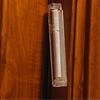
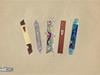
The rabbi had several ideas, but the idea of launching a campaign for Jews in the area to place mezuzahs on their doors stuck out. When launching The Mezuzah Campaign in 1974, the Rebbe—Rabbi Menachem M. Schneerson, of righteous memory—highlighted the mezuzah as a source of spiritual protection, and compared a mezuzah to the helmet a soldier wears into battle.

After Caytak explained his thoughts, the friend pledged to cover 100 mezuzahs. He had first found his way to Caytak’s Chabad center after an earlier antisemitic attack in Ottawa, where the rabbi welcomed him and a close friendship was born.
Since then, he has studied with Caytak and even joined the rabbi on what he calls a “wonderful whirlwind day trip” to New York to visit the Ohel (the Rebbe’s resting place in Queens) and Chabad-Lubavitch World Headquarters in Brooklyn.
By Tuesday morning, a flyer and registration form were posted online, and requests for mezuzahs were pouring in. More than a dozen have since come from Belleville, representing a considerable portion of its small Jewish population, among them several people who were in the sanctuary during the shooting. In Ottawa, Caytak says, many of those signing up are people he had never met and who had little previous connection to Jewish communal life.
The form asked which door each family wished to have the mezuzah placed on. The vast majority chose the front door.
“People are coming forward and saying that they are ready to be visibly Jewish,” Caytak says. “One woman told me that she was in the synagogue during the shooting, and wants to install a mezuzah on her front door to thank G‑d for the miracles she experienced.”

The distribution began on Sept. 28, during the intermediate days of Sukkot, and Caytak intends to visit as many households as he can to help affix them. The donor has asked to travel to Belleville with him to help install the mezuzahs.
“The overwhelming response to the campaign shows that it is already having a positive impact, and since the mezuzahs will remain on people’s doors, it will also be a lasting one,” the donor says. “It is nice to be a small part of it.”
To him, the campaign also carries a lesson he first learned during his lessons with the rabbi.
“It illustrates how the best response to awful events is to respond with positive action and purpose,” he says.




Start a Discussion